

The Relationship between Building Conservation, Sustainability and Climate Change
Building Conservation
Building conservation can be defined as the wise use and management of a building to prevent unwanted change, which can include unsympathetic or incompatible alteration, decay, destruction, misuse, or neglect. The objective is “safe-guarding the character-defining elements of a cultural resource so as to retain its heritage value and extend its physical life.”
In Canada, the Standards and Guidelines for the Conservation of Historic Places in Canada is a useful reference tool that provides advice on heritage conservation treatments.
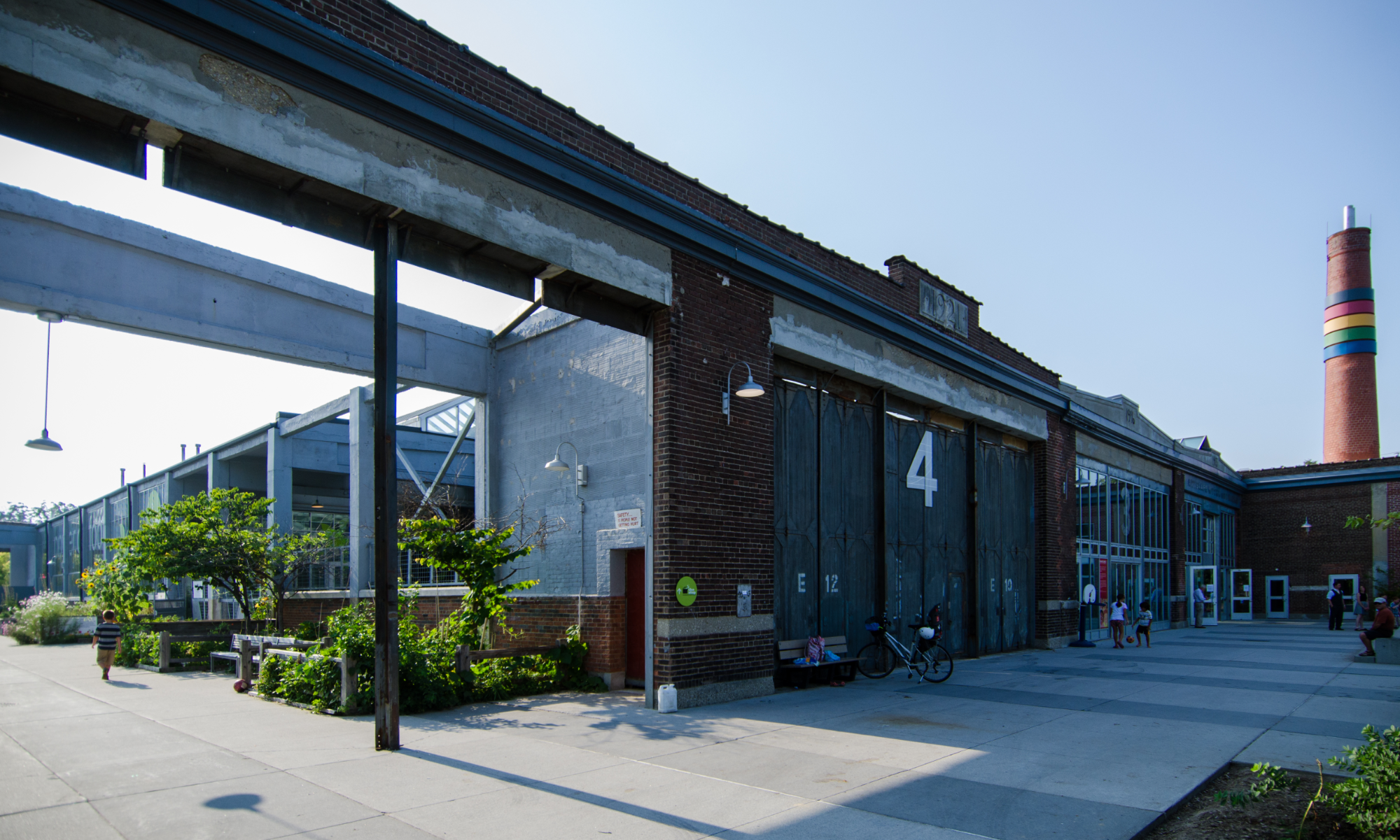
Wynchwood Barns Exterior, Toronto, ON. Source: Jeff Hitchcock via Flickr
Sustainability for Building Retrofit and Rehabilitation
The organizing principle of sustainability in the built environment is often considered to be sustainable development, or, “development that meets the needs of the present without compromising the ability of future generations to meet their own needs.”
Building conservation is a crucial contributor to sustainability because it fulfills the interrelated economic, cultural, social and environmental principals of sustainable development. See:
Potential gains achieved through a conservation approach are listed below:
Environmental
- Conserving embodied energy and benefiting from existing construction;
- Reusing and recycling existing sites, buildings and materials with high service lives and repairability;
- Using appropriate technologies or time-tested regionally/climate adapted materials and models;
- Reducing urban sprawl while protecting forests, wildlife, farms, and other natural environments;
- Reducing the waste and landfill use associated with demolition.
Socio-Cultural
- Conserving diverse cultural memories;
- Conserving and building community and identity;
- Conserving community spaces and amenities
Economic
- Reducing development costs by using already developed sites;
- Increasing property value through redevelopment;
- Promoting the use of a lifecycle costing model that embodies a long-term view;
- Developing skilled jobs that lead to durable and equitable employment;
- Supporting regional economies, including local materials suppliers.
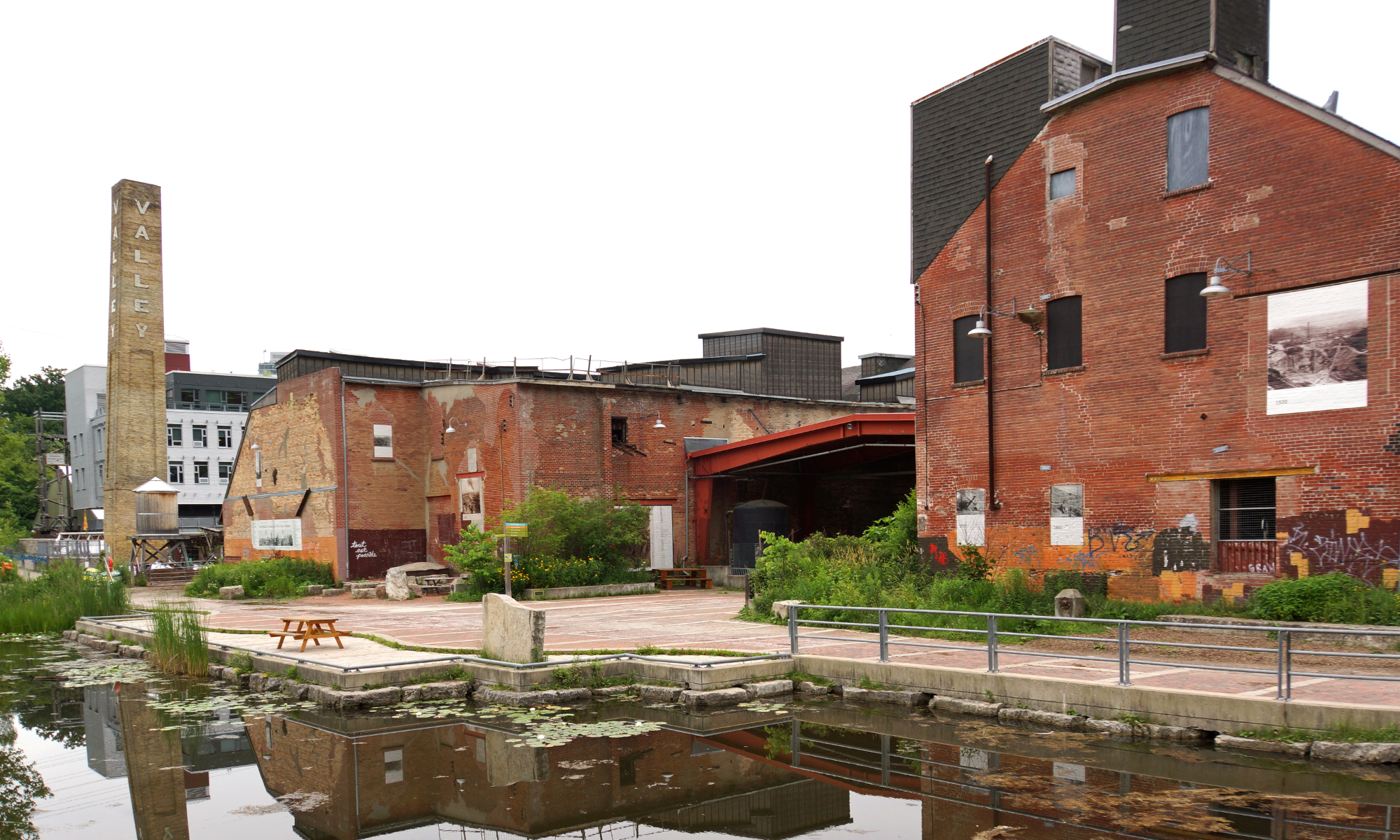
Evergreen Brick Works by Dennis Jarvis via Flickr
IMPROVING ENERGY EFFICIENCY IN EXISTING BUILDINGS ENCOMPASSES THE MOST DIVERSE, LARGEST AND MOST COST-EFFECTIVE MITIGATION OPPORTUNITIES IN BUILDINGS TO COMBAT CLIMATE CHANGE
-IPCC
IMPROVING ENERGY EFFICIENCY IN EXISTING BUILDINGS ENCOMPASSES THE MOST DIVERSE, LARGEST AND MOST COST-EFFECTIVE MITIGATION OPPORTUNITIES IN BUILDINGS TO COMBAT CLIMATE CHANGE
-IPCC
Climate Change and Sustainable Retrofit and Rehabilitation
Today, a key component of environmental degradation is climate change. It is now commonly recognized that climate change must be addressed on as many fronts as possible to counteract and mitigate its harmful effects on our environment.
It is also now common knowledge that buildings are the largest single source of energy use, waste, and emissions into the atmosphere. For example, nearly half of the greenhouse gases produced in Canada come from buildings. Improving the performance of our existing building stock, then, is singularly important in mitigating climate change.
In fact, according to the Intergovernmental Panel on Climate Change (IPCC), “…over the whole building stock, the largest portion of carbon savings by 2030 is in retrofitting existing buildings and replacing energy using equipment…” and energy savings of 50-75% can be achieved in commercial buildings that make smart use of energy efficiency measures.
But it’s also important to keep in mind that existing buildings account for character and identity in our towns and cities. For example, respondents of a survey conducted in Vancouver, B.C. overwhelmingly support the preservation of heritage buildings, reporting that these contribute to citizens’ sense of place, i.e. the special meaning, character, unique identity, and geographic location gives a community. The same survey found that 50% of respondents would prefer living in a historic building sensitively retrofitted for energy efficiency and thermal comfort as compared to the 11% of respondents preferring a new building.
Best practices for building retrofit and rehabilitation, then, should take into account a building’s contribution to the community’s sense of place. Technologies, practices, and durable and healthy materials should be incorporated in ways not adversely affecting the building’s character or heritage value.
Consumed by Canadian Buildings
Generated by Canadian Buildings
Climate Change and Avoided Impact
Older buildings often contain many features that provide a built-in measure of inherent sustainability. These characteristics can be ascribed largely to the avoided impact they have on the environment. This includes such holistic and long-term factors as the embodied energy and embodied carbon older buildings represent. Inherent sustainability also often refers to the sustainability of traditional building design and construction techniques, durable and/or local materials, repairable assemblies, and longer-term life planning.
One way to measure the sustainability of a design, retrofit, or rehabilitation project is to conduct a Life Cycle Assessment (LCA). Life cycle thinking is applied to building components, assemblies, and products by asking these questions:
- What is involved in making a product/assembly, transporting it to a site, and installing it?
- What inputs and waste will occur related to using the product over its life?
- What will happen to the product when it is no longer needed?
The answers to these questions most often reveal that older buildings have much higher sustainability due to their use of natural and durable materials, repairable assemblies, and replaceable small components.
It’s also important to factor in the consequences of new construction. It takes decades for a new, energy-efficient building to overcome the negative environmental impacts created during its construction process. Moreover, manufactured components are used with high frequency in new construction, which can limit repair opportunities, lead to replacement, and heighten the negative impacts of manufacturing and of building waste. In other words, adapting and reusing existing buildings rather than demolishing and/or building new ones is usually the better strategy to make the built environment more immediately sustainable.
There is, however, room to improve the synergies between heritage conservation and environmental sustainability, and the illustrated guidelines footnoted below are intended to address that opportunity. , ,
Finally, building conservation is also about “green building” in the sense that, for properties that are not formally recognized heritage properties, upgrading the building’s operating environmental efficiency is still desirable. However, sustainability in Canada and around the world is recognized as being so much more than adding “green gadgets.” We must focus on the bigger picture to be successful in addressing environmental degradation and climate change. Technology is only part of the answer.
Social and Local Economic Value
Because maintaining, repairing, and conserving “pre-Modern”, “pre-WWII”, and vernacular buildings may be more labour-intensive activities than they would be in newer buildings, these buildings often add value to their surrounding communities through local job creation. Approaching older buildings through a sustainability lens also adds broader economic and societal benefits and cultural diversification through cultural and heritage tourism and stronger social connections. , ,
BECAUSE IT NECESSARILY INVOLVES THE CONSERVATION OF ENERGY AND NATURAL RESOURCES, HISTORIC PRESERVATION HAS ALWAYS BEEN THE GREENEST OF THE BUILDING ARTS
– Richard Moe, United States National Trust, 2008
THE FUNCTIONAL ADAPTABILITY OF HISTORIC BUILDINGS IS ONE OF THEIR GREAT UNDER-RECOGNIZED ATTRIBUTES. YOU CANNOT HAVE SUSTAINABLE DEVELOPMENT WITHOUT A MAJOR ROLE OF HISTORIC PRESERVATION, PERIOD
– Donovan Rypkema, “Sustainability, Smart Growth and Historic Preservation” Historic Districts Council Annual Conference, New York City, 2007
THE ACCUMULATED BUILDING STOCK IS THE ELEPHANT IN THE ROOM: IGNORING IT, WE RISK BEING TRAMPLED BY IT. WE CANNOT BUILD OUR WAY TO SUSTAINABILITY; WE MUST CONSERVE OUR WAY TO IT
-Carl Elefante, Forum Journal: The Journal of the National Trust for Historic Preservation, Summer 2007