


Miscellaneous Materials
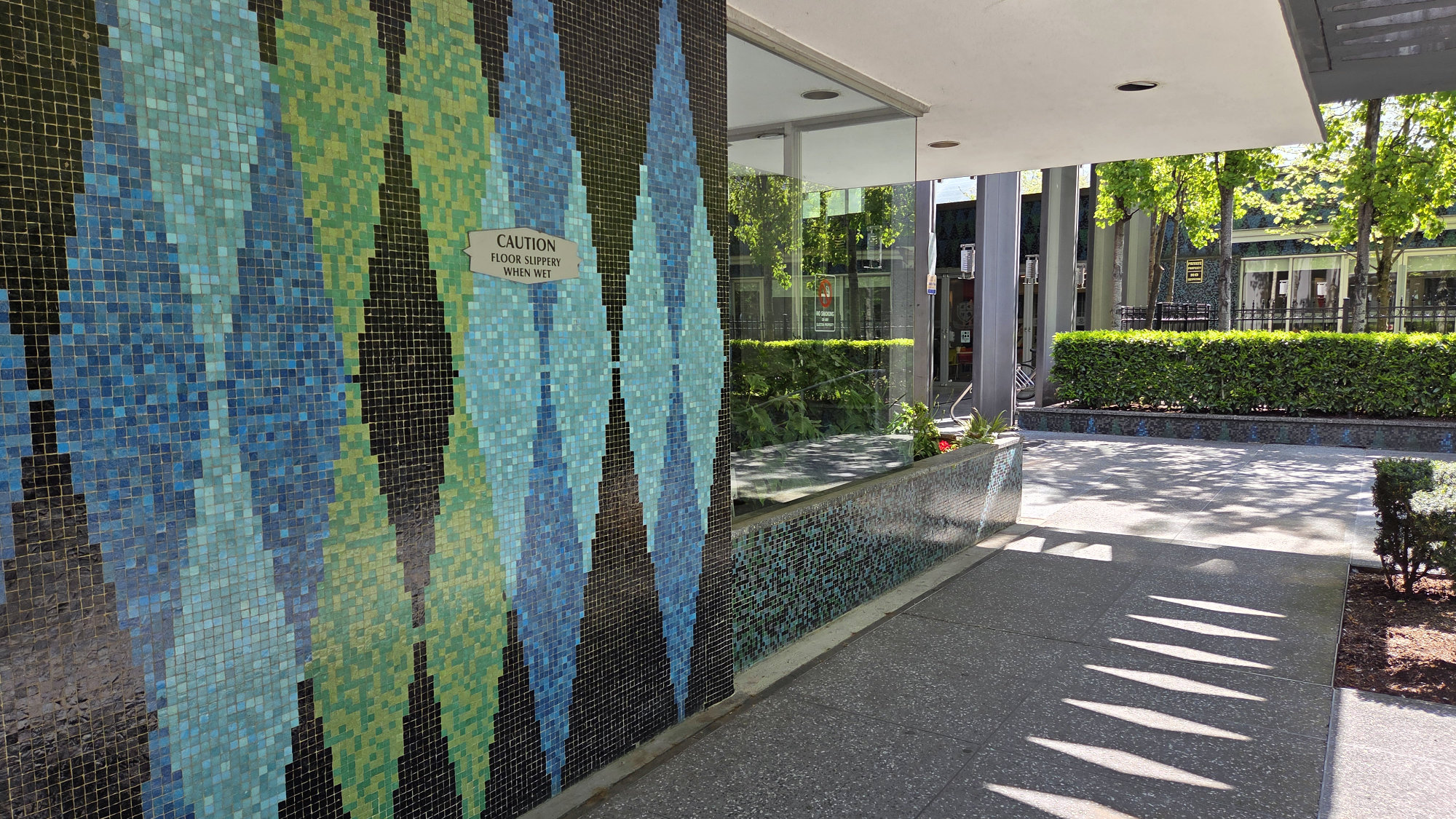
Mosaic tile wall cladding designed by artist BC Binning. Former BC Hydro Building, Vancouver, BC. Source: TRACE
Sustainable Conservation Project Guidelines for Miscellaneous Materials
| Recommended | |
|---|---|
| 1 | Disassembling character-defining elements where it does not affect material integrity prior to undertaking sustainability upgrades and reassembling at the conclusion of associated upgrades. |
| 2 | Reinstating visible elements into replacement systems where they are character-defining elements. |
| 3 | Reinstating less durable material awnings to shade windows and storefronts. |
| 4 | Applying protective coating(s) that are compatible with a material and contain no toxins. |
Sustainability Challenges
Many materials from the Modern period such as plastic, Bakelite™, plexiglass, asbestos, asphalt, rubber, and fibreglass can be challenging or impossible to replace as the product is no longer manufactured and/or the product may contain toxic substances.
From the Standards and Guidelines
These diverse materials may be character defining in their own right, or used in character-defining assemblies or systems. Materials, such as plastic, plexiglass, asbestos, asphalt, rubber, thatch, sod and fiberglass, have served a multitude of uses in construction. Flooring surfaces, including cork, linoleum, carpet or ceramic tile, and decorative or functional treatments, such as fabrics, wall coverings and acoustical panels, may also be character defining. Modern materials, such as plastic have been used as lighter, less breakable alternatives to glass, metal or wood in exterior cladding, interior partitions, canopies, screens and signage. p.246, SGCHPC
Standards and Guidelines for the Conservation of Historic Places in Canada Sustainability Considerations (Page 249)
| Recommended | |
|---|---|
| 1 | Salvaging character-defining miscellaneous materials that are no longer manufactured for reuse elsewhere in the building. |