


Considering District-Wide Infrastructure
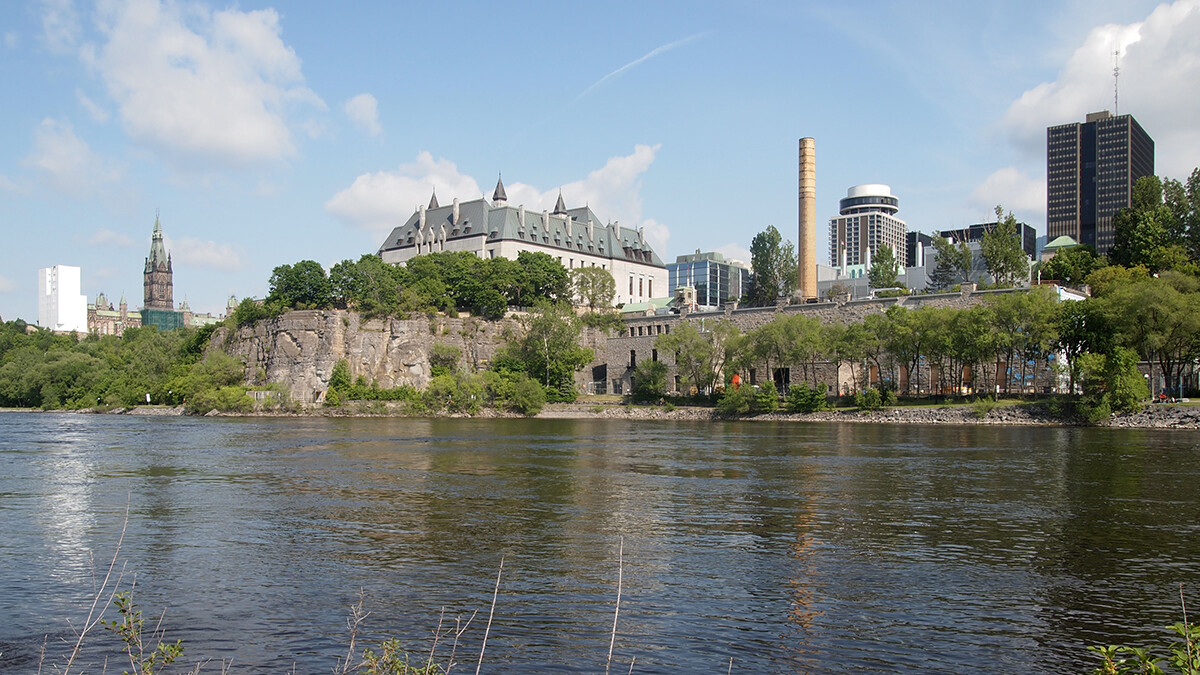
Cliff Street Heating Plant (on the right), district infrastructure for the Parliamentary Precinct, Ottawa, ON. Source: TRACE
In larger complexes, campuses, and large building groups, there is greater benefit and available resources to deliver services via a centralized source. Centralized or district-wide servicing provides greater efficiency and can serve significant areas depending on the size of the plant and distribution system. In Canada, district heating and cooling systems are typically found in downtowns where multiple buildings are connected via a supply network, or in large campuses such as universities, hospitals, and other multi-building institutional and residential complexes.
District servicing can satisfy the heating and cooling requirements of large building collectives by pooling individual resources and delivering from a single or a few sources. District heating plants contain boilers that provide steam to buildings connected to the plant via underground steam pipes. While in-building systems are constructed to include excess capacity to accommodate the seasonal variation in heating demands, district heating achieves greater efficiency as boiler loads are managed to suit the current demand. District heating may also take advantage of efficient fuel sources and waste sources not practical for individual systems. With the majority of the generating infrastructure located away from the outside of a connected building, greater spatial efficiency is achieved as the space is available for other uses.
Where building interiors have been identified as containing character-defining elements, existing district servicing becomes that much more important.
Interior building systems are designed to suit the nature of the supplied heating source. For instance, steam-supplied heating systems possess specialized distribution infrastructure and radiators that may not be suited to other sources like hot water or forced air.
When buildings are removed from a district system, new local systems must be installed to satisfy heating and/or cooling, requiring additional space for heat generating appliances, potentially new distribution systems (piping and ducts), and delivery appliances (radiators and vents), all of which may require significant modification to interior and sometimes exteriors. Modifications include new dropped ceilings, new vertical and horizontal chases, new window sill installations, new/enlarged service spaces, lost interior finishes sacrificed to install new distribution infrastructure within cavities, or surface-mounted conduits that may not be in keeping with a building’s character or heritage value.
Where district heating and cooling exists, efforts should be made to maintain and enhance it by installing more efficient heat generating systems and exploring opportunities for capturing waste heat from buildings or processing it within the district. Historical campuses that once had district heating plants may have retained the associated infrastructure (boiler houses, tunnels, and piping). This infrastructure may accommodate reinstating district heating/cooling, thereby enhancing overall efficiency while revisiting original functionality and benefiting from current, more environmentally appropriate technologies.
There are a number of current technologies available for district heating and cooling, including fuel-fired, geo-exchange, bio-gas, co-generation (waste capture), and deep-water cooling.