


02 Building Site and Surrounding Context
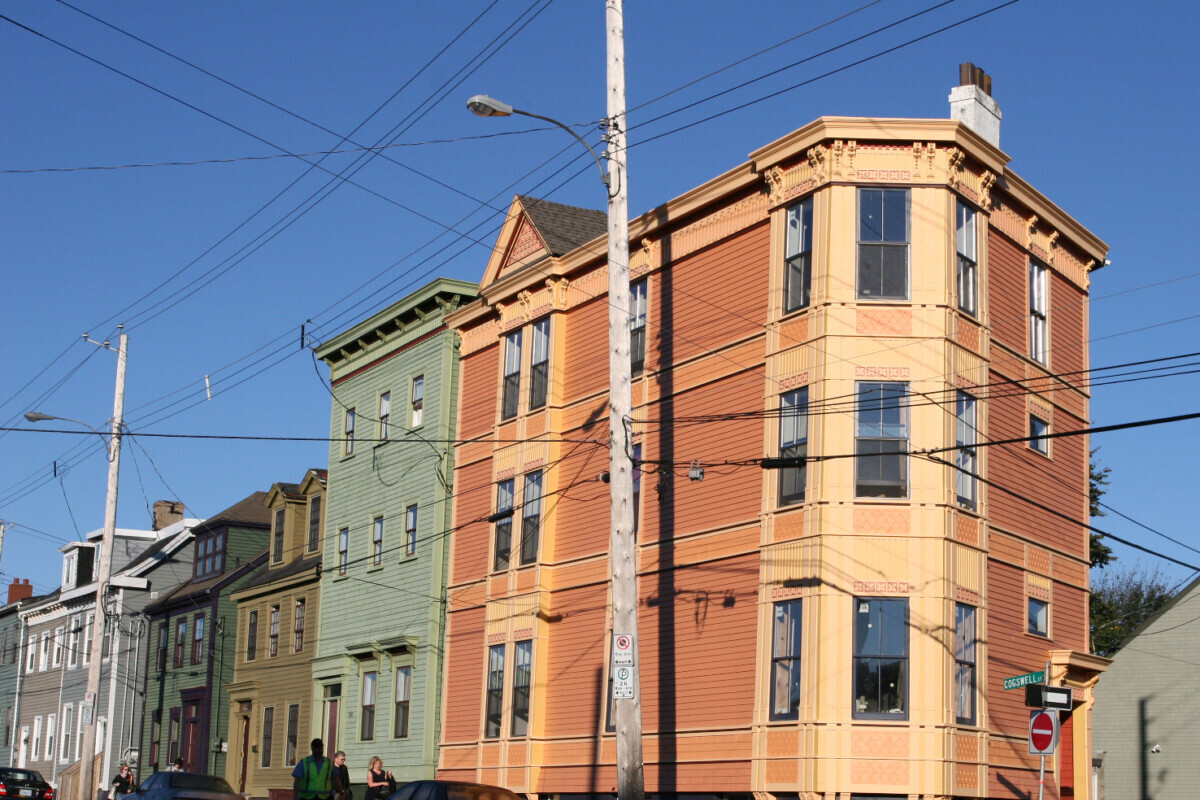
Compact urban forms such as this one, found in Halifax, is an efficient way to build since the proximity to neighbouring buildings allows for more efficient heating, increased density, and decreased automobile usage. Halifax, NS. Source: Shelley Bruce
Building Resilience is intended to provide guidance for considering sustainability modifications when the building site and the surrounding context are identified as character-defining elements of a heritage property. They also give direction on how to minimize the impact of introducing new elements and intervening in the non-character-defining property and surrounding context associated with an older building.
Building siting refers to the placement of a building in its environment and may include solar and wind orientation, relative elevation, and landscape elements within its site. Each of these considerations influences how a building is exposed to sunlight, airflow, and precipitation. Siting characteristics can aid in sustainability efforts with ideal orientation.
Surrounding context refers to the placement of a site within a wider context. Context varies from site to site and is usually in a state of flux, which influences a building’s behaviour. Potential contextual influences include building density, relative building heights, street widths, presence of public transit, and shared servicing (campus heating/cooling plants and localized water treatment). Dynamic relationships within a broader context are especially important when a building is located within a landscape of cultural heritage value, a well-established area, or Heritage Conservation District.
Changes to the surrounding context can alter the way a building behaves. If taller buildings are constructed in the surrounding context so as to block sunlight entering windows, for example, new artificial lighting would need to be installed. If an adjacent building is demolished, side walls with limited insulation would be exposed. This would increase heating/cooling demands and require the replacement or upgrade of building systems. Changes like these, in other words, require a review of their impact on the dynamic balance between the building and its various systems (mechanical, electrical, building envelope, etc.). If such changes took place in a previous retrofit or rehabilitation, they can be studied to gain insight into a building’s function over time and to provide guidance in subsequent modifications aimed at improving sustainability.
Existing buildings can be less efficient than new construction; however, it is often preferable to explore alternate approaches that mitigate lack of efficiency. For instance, inefficiency could be offset by introducing highly efficient infill structures. This should be done in a manner that respects an area’s morphology and minimizes impact on existing building system behaviour. This strategy can be applied on multiple scales, including in established urban neighbourhoods via laneway housing (if this is a characteristic of an area’s morphology) and in campus settings via new, sensitively inserted buildings.
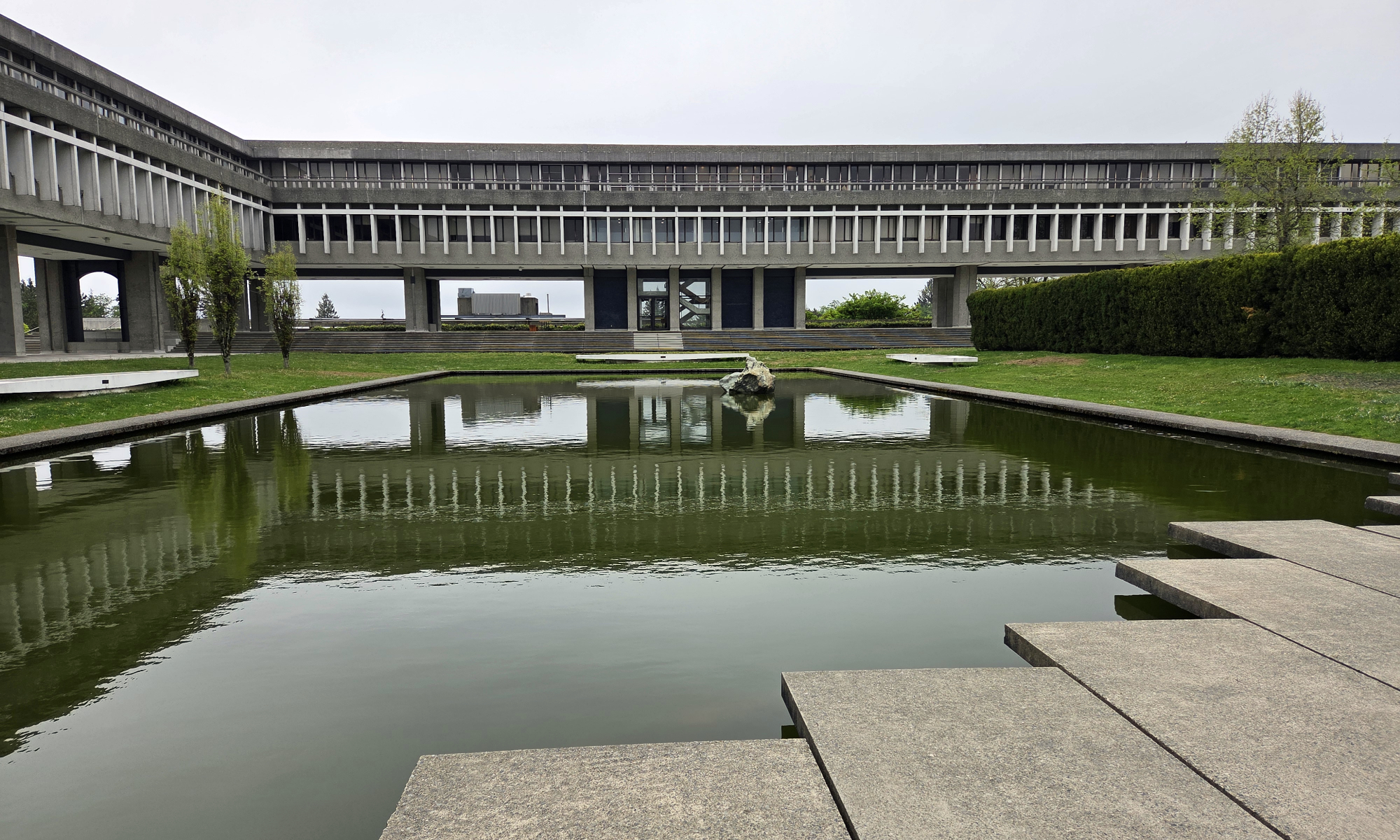
Simon Fraser University Academic Quadrangle, Surrey, BC. Source: TRACE
Sustainable Rehabilitation Project Guidelines for Building Site and Surrounding Context
| Recommended | |
|---|---|
| 1 | Understanding the impact of adjacent buildings and context elements on building performance, including the influence of contextual change over time. |
| 2 | Maintaining large scale landscape elements, which moderate climate impact, including large scale vegetation and hardscape patterns. |
| 3 | Maintaining small scale site planting, including trees and other landscape features, which provide shading and windbreaks. |
| 4 | Exploring opportunities that retain historic buildings through site infill while respecting a context’s character and development pattern. |
| 5 | Maintaining building-to-building relationships where there is abutting construction and where the buildings are in close proximity to each other. |
| 6 | Installing sustainable energy generating equipment only where compatible with the heritage character of the site and/or surrounding context. |
| 7 | Locating new campus buildings to minimize their impact on landscape character and on building-to-building relationships when increasing the overall density of the campus. |
| 8 | Installing new sustainable landscape features, such as bioswales, rain gardens, and large collection tanks, where they are compatible with the heritage character and functioning of the site and the surrounding context. |
| 9 | Reusing support structures to accommodate bicycle parking or other ancillary functions that support sustainable uses. |
Inherently Sustainable Features
Sustainability Challenges
Sustainability challenges for existing buildings, particularly older buildings, include:
- Significant changes in context that fundamentally changes a building’s behaviour requiring substantial remedial interventions;
- Lack of control over surrounding context;
- Increasing density while responding to an area’s heritage character or heritage value.
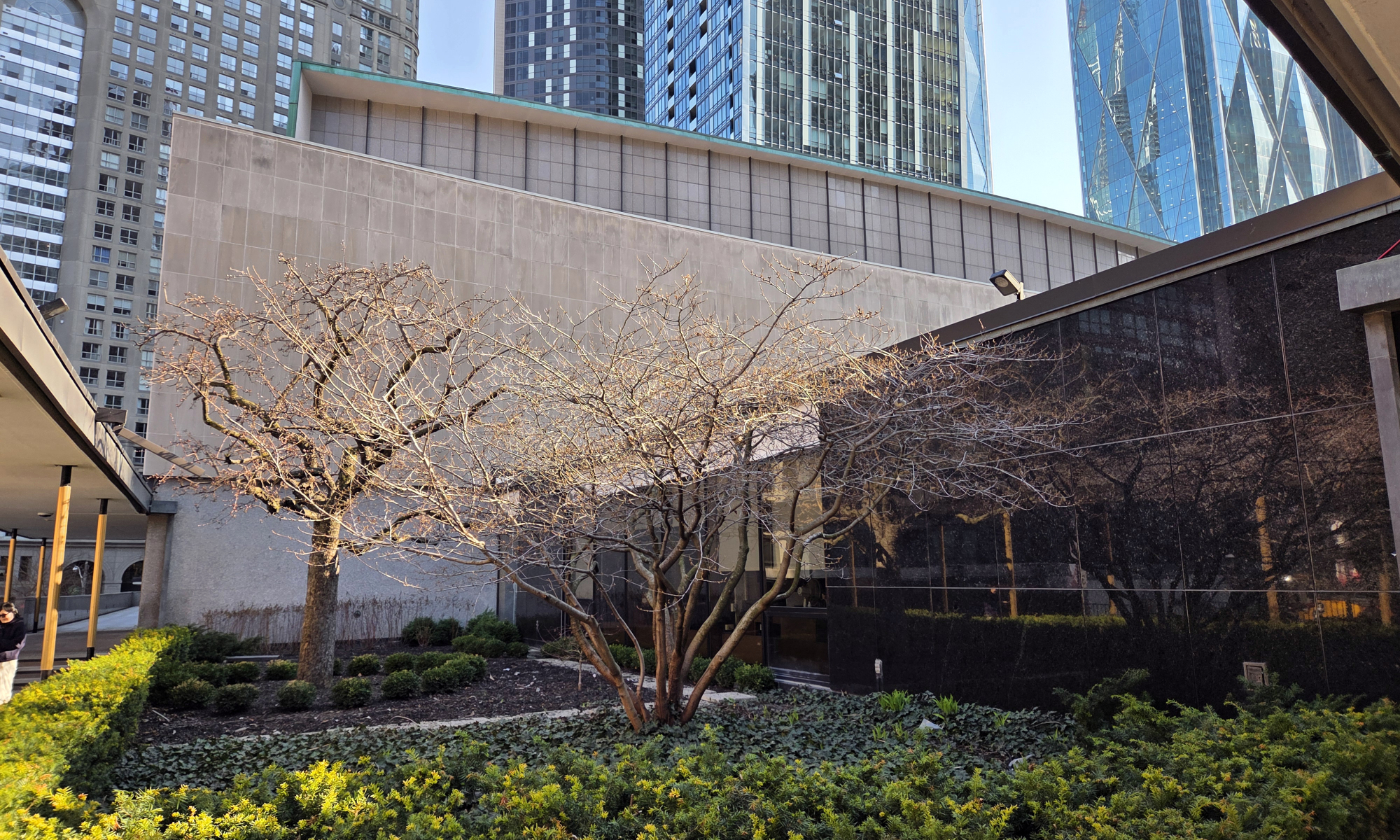
Meridian Hall integrated landscape, Toronto, ON. Source: TRACE
Interrelationships
Select examples of interrelationships between building elements building site and surrounding context include: