


05 Roofs
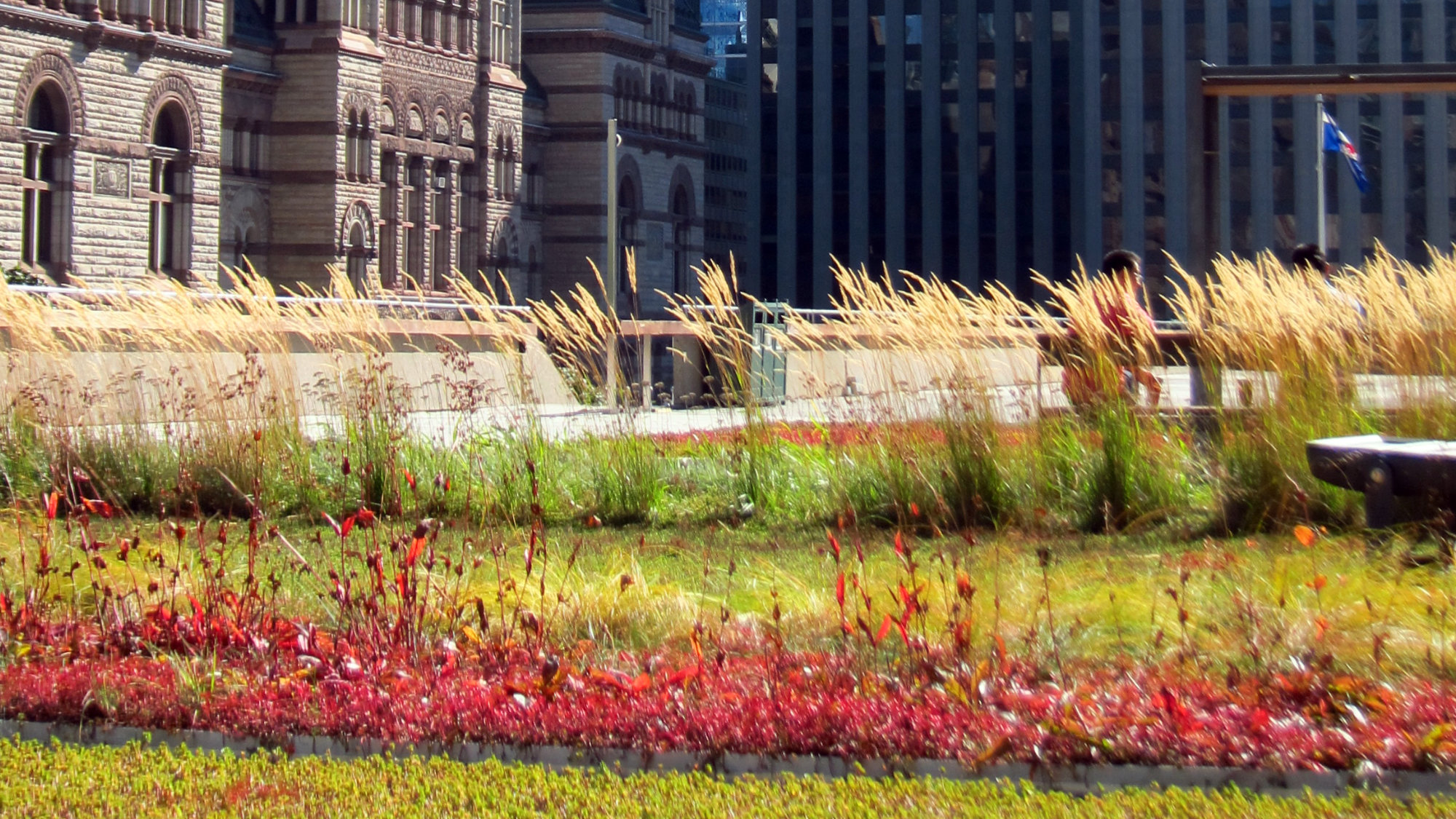
Green roof installed on the podium deck of the Toronto City Hall. Toronto, ON. Source West Annex News Flickr
This section is intended to provide guidance for considering sustainability modifications for roofs, especially when they are identified as character-defining elements of an historic place. It also gives direction on how to minimize the impact of introducing new elements and intervening on non-character-defining roofs in a heritage building.
Roofs include a range of finish assemblies with visible finishes such as copper, slate, thatch, cedar shake, asphalt shingle, and flat roof built-up membranes. These assemblies protect the underlying materials and interior spaces from external elements. Elements such as domes, cupolas, dormers, turrets, chimneys, and cresting may be architectural embellishments and/or functional elements that are integrated into a roof’s composition and, as such, affect the roof’s performance and exterior form. Another group of roof elements – eaves, fascias, soffits, gutters, and downspouts – protect and shield exterior walls. These protecting elements should be maintained and enhanced to limit exposure of exterior wall components that are not designed to accommodate increased exposure.
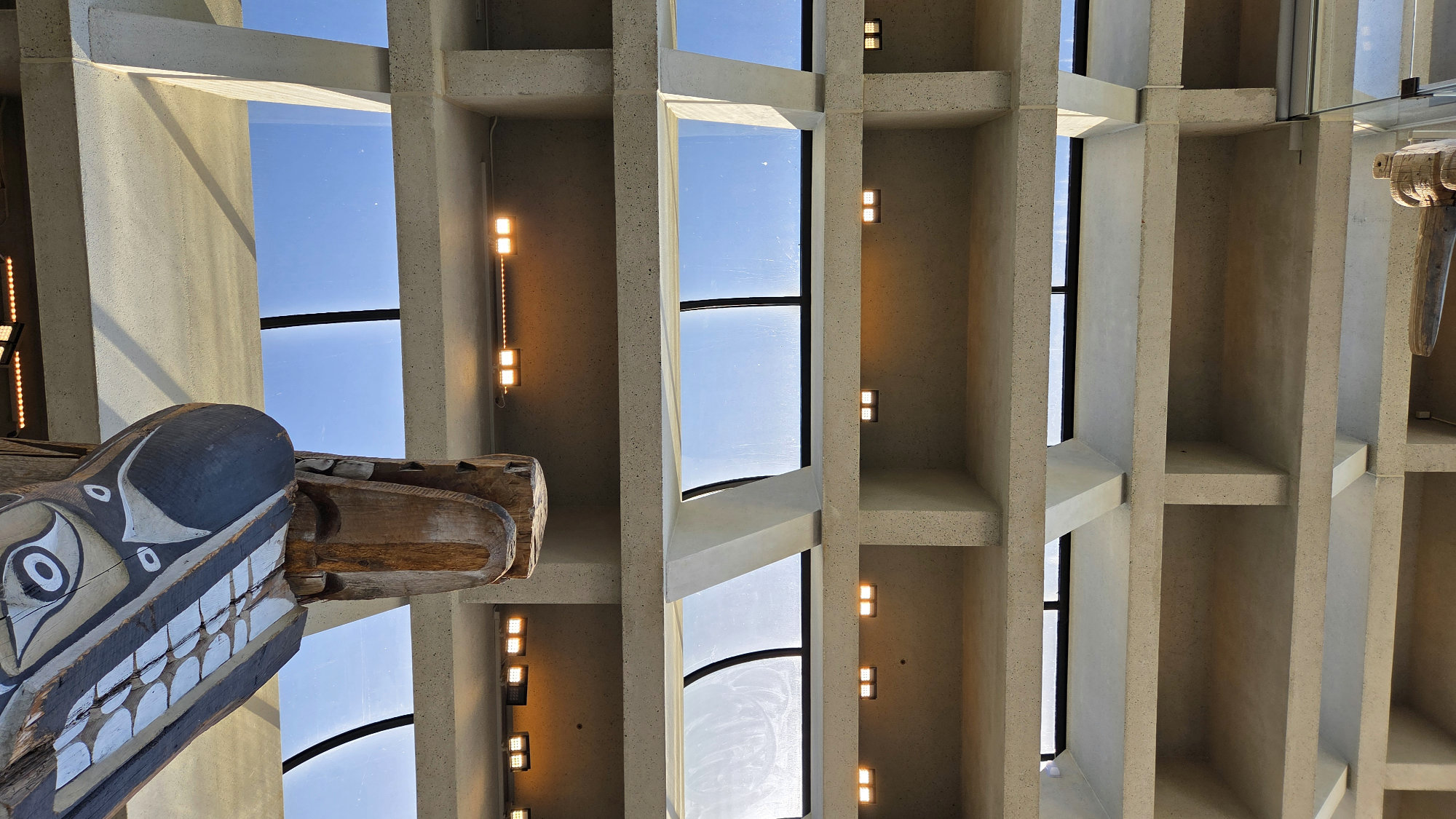
Interior view of the roof at the Museum of Anthropology with specific solid and glazed areas allowing for abundant natural light for this portion of interior. Vancouver, BC. Source: TRACE
Sustainable Rehabilitation Project Guidelines for Roofs
| Recommended | |
|---|---|
| 1 | Maintaining roof elements such as cupolas, domes, chimneys, and dormers where they have a functional use and/or contribute to character-definition. |
| 2 | Maintaining/reinstating roof elements, including eaves, fascias, soffits, and downspouts that shield exterior walls and openings to limit material degradation. |
| 3 | Exploring opportunities for integrating water collection measures with downspouts in order to provide grey water for reuse. |
| 4 | Replacing roofing materials to high/low albedo roofs (as appropriate) where heritage character is not impacted. |
| 5 | Evaluating opportunities to increase roof insulation and/or ventilation in order to limit heritage character impact while improving performance. |
Inherently Sustainable Features
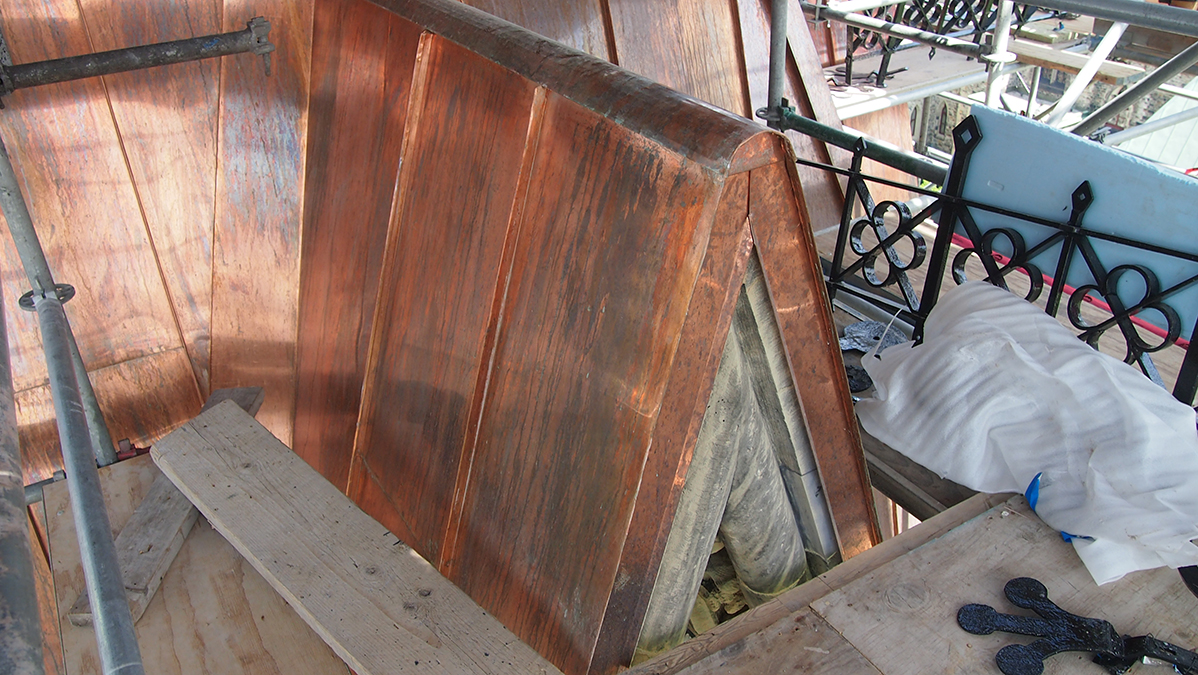
Modified fascia height to accommodate new insulation. Modifications achieve building envelope performance improvements with very limited visual impact. East Block, Parliament Hill, Ottawa, ON. Source: TRACE
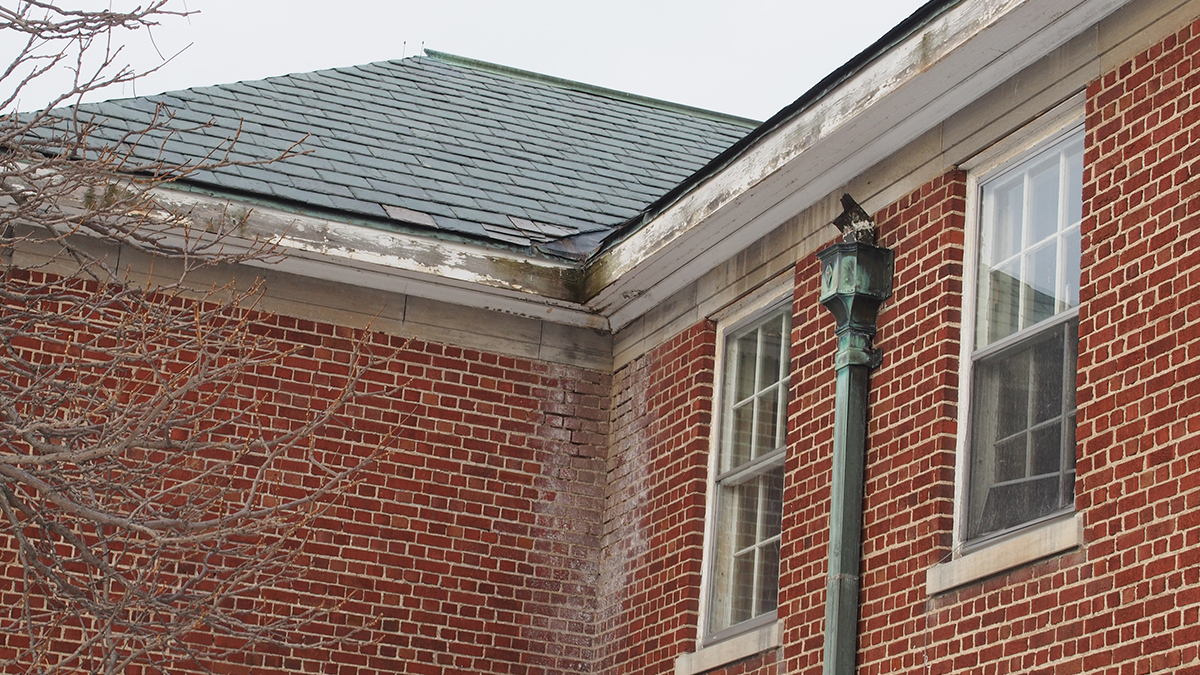
Exterior walls, especially at interior corners, have been exposed to significantly increased amounts of water from the roof valley due to the loss of eaves troughing. As a result, the mortar is failing and the brick cladding is spalling. In addition, opportunities to collect rainwater for grounds maintenance are lost. Sagonaska School, Sir James Whitney School, Belleville, ON. Source: TRACE
Sustainability Challenges
Sustainability challenges associated with an existing building’s roof, particularly heritage buildings, include:
- Roof profiles that are important exterior form elements and may limit sustainable modification options where they are visible;
- Airflow through roof cavities and open attic spaces. Airflow must be well understood before modifying to limit unintended degradation from temperature, airflow, and moisture changes, which can affect roofing materials and underlying structures.
Interrelationships
The interrelationships to consider between roofs and other existing building elements include:
From the Standards and Guidelines
As the most exposed architectural assembly, the roof is vital in protecting the rest of the building from the weather. A deteriorated roof can cause catastrophic damage to interiors and to the building structure. The roof is also an important architectural feature that contributes to a building’s form and aesthetics. The profile and details of a roof may also be character-defining despite its more understated appearance compared to a large hip or gable roof. p.139, SGCHPC
Standards and Guidelines for the Conservation of Historic Places in Canada Sustainability Considerations (Page 144)
| Recommended | Not Recommended | |
|---|---|---|
| 25 | Complying with energy efficiency objectives in upgrades to the roof assembly in a manner that respects the building’s character-defining elements, and considers the energy efficiency of the building envelope and systems as a whole. | Damaging or destroying character-defining elements while making modifications to comply with energy efficiency requirements. |
| 26 | Working with energy efficiency and sustainability specialists to determine the most appropriate solution to energy efficiency and sustainability requirements with the least impact on the character-defining elements and overall heritage value of the historic building. | Making changes to the roof assembly, without first exploring alternative sustainability solutions that may be less damaging to the character-defining elements and overall heritage value of the historic building. |
| 27 | Exercising caution and foreseeing the potential effects of insulating the roof on the building envelope to avoid damaging changes, such as displacing the dew point and creating thermal bridges, or increasing the snow load. | Installing insulation without anticipating its potential impact on the building envelope.
Inserting thermal insulation in roof assemblies, without providing appropriate vapour barriers or ventilation. |
| 28 | Installing thermal insulation in non-character-defining roof spaces, such as attics, without adversely affecting the building envelope. | Installing insulation in habitable attic spaces without considering its effect on character-defining interior features such as mouldings. |
| 29 | Ensuring that structural, drainage, and access requirements to improve the roof’s energy efficiency can be met without damaging character-defining elements. | |
| 30 | Assessing the addition of vegetated roof systems (green roofs) or storm water cisterns to at-roof assemblies, and their impact on the building’s heritage value and structural integrity, before work begins. | Adding a vegetated or reflective membrane roof system that might compromise the building’s heritage value or its structural integrity. |