

Architectural and Structural Metals
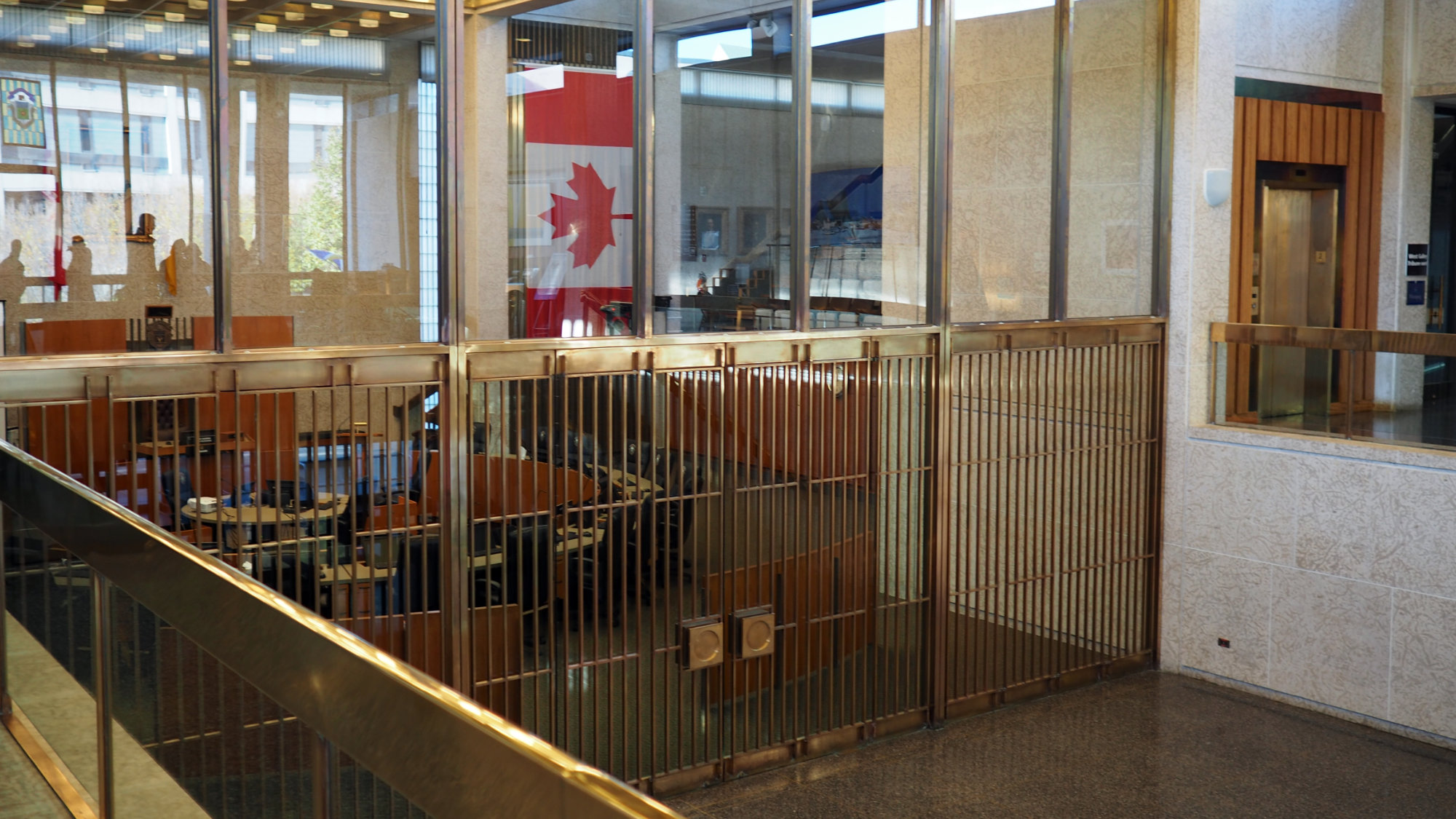
Approaching the Council Chamber with its highly durable bronze finishes. Winnipeg City Hall, Winnipeg, MB. Source: TRACE
Sustainable Conservation Project Guidelines for Architectural and Structural Metals
| Recommended | |
|---|---|
| 1 | Reinstating metal projecting elements such as cornices and eaves that shield building envelope components. |
| 2 | Maintaining mullion profiles and spandrel panel sizes when rehabilitating or upgrading a metal and glass curtain wall. |
| 3 | Rehabilitating metal components by splicing and patching deteriorated areas. |
| 4 | Retaining/reinstating sound metal components within an assembly after rehabilitating adjacent surfaces. |
| 5 | Designing structural steel interventions using reversible bolted connections. |
| 6 | Recycling all metal elements removed from secondary elements that cannot be retained. |
Related Inherently Sustainable Elements
Sustainability Challenges
Sustainability challenges for architectural and structural metals include:
- Material extraction and production that may create pollution and require significant energy input;
- Metals that may not be locally available;
- Protective coatings that can fail prior to the underlying metal;
- Protective coatings that may contain toxic substances;
- Toxicity of some metal such as lead, which limits potential treatment options.