

Glass and Glass Products
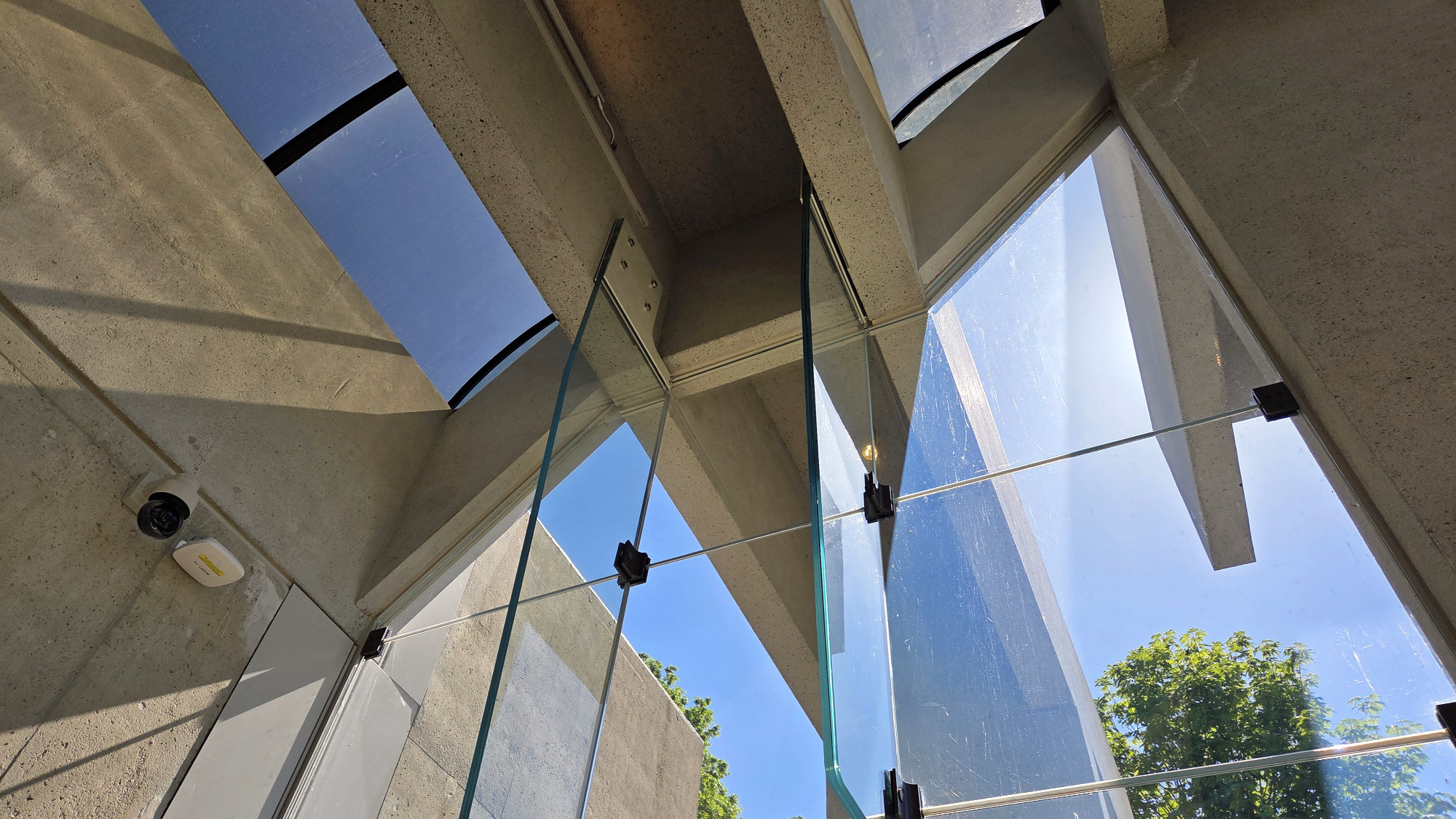
The Glazing of the main gallery in the Museum of Anthropology at the University of British Columbia. Vancouver, BC. Source: TRACE
Sustainable Conservation Project Guidelines for Glass and Glass Products
| Recommended | |
|---|---|
| 1 | Rehabilitating and reinstating covered skylights and windows to improve access to natural light. |
| 2 | Augmenting glass systems by adding interior storm windows. |
| 3 | Retaining multi-layered single glazed windows assemblies (storm and primary windows) that do not have gas fills. |
| 4 | Rehabilitating decorative glass products in light fixtures to improve fixture efficiency. |
| 5 | Retaining interior glass and glass block partitions. |
Related Inherently Sustainable Elements
Sustainability Challenges
Sustainability challenges for glass and glass products include:
- Limited to no insulating value when used in fenestration;
- Limited life spans of sealed window units due to gas fills and seals;
- Glass window assemblies that may contain toxic materials (e.g., lead came and asbestos in putty);
- Glass, which can be damaged with limited force (varies on thickness and type), requiring premature replacement.
Standards and Guidelines for the Conservation of Historic Places in Canada Sustainability Considerations (Page 242)
| Recommended | |
|---|---|
| 1 | Retaining and carefully storing historic glass elements and making them available for reuse. |