

Understanding Behavioural Change to Improve Performance
An integrated management approach is one of the most useful strategies that can be implemented to improve energy performance in an existing building. This approach includes:
- Regular condition and performance assessments;
- Regular cyclical maintenance of all components from HVAC to building envelope;
- Provision of training for building managers, operators and users in how their behaviour can address sustainability objectives;
- Establishment and implementation of building operation guidelines that take into account seasonal adjustments, building occupancy, day-night cycles, etc.
Integrated Management Strategies
Integrated management strategies focus on considering and coordinating a large range of systems that impact building longevity and efficiency, to arrive at a comprehensive approach that, ideally, balances the various competing needs.
Strategies affecting environmental performance include:
- Conducting periodic building condition assessments to identify potential maintenance projects needed in a timely manner;
- Carrying out capital projects and general maintenance to address system weaknesses and general wear in a timely manner;
- Providing the means to appropriately fund repair projects and general maintenance in order to prolong and effectively manage assembly life expectancies;
- Preparing training manuals, continuously updating maintenance logs and training personnel in treatments that incorporate heritage conservation and sustainability. Maintenance logs should include reference to necessary seasonal building adjustments that respond to non-mechanical system design aspects;
Behaviour-based Management Strategies
Studies show that “positive occupant behaviour can reduce energy consumption by up to 20%.”Implementing a behaviour-based energy conservation plan through policies and education may well be the most effective energy efficiency strategy of all. User programs, if managed effectively, have been found to dramatically increase sustainability in general and energy savings in particular. These programs can improve protection of building fabric as well.
Some means and methods of behaviour-based building management include:
- Engaging users in controlling their environment with the appropriate education (i.e., operable windows, individually controlled radiator units). Control with education creates awareness, which ideally leads to more targeted and reduced consumption;
- Maintaining regular two-way communication with occupants, celebrating successes and listening to why energy wasting behaviour exists so that the root causes can be addressed;
- Providing occupants with easy access to resource use information, including feedback on resources saved;
- Offering benefits to encourage users to create building efficiencies;
- Limiting materials and assemblies with unknown performance characteristics. This is especially important in existing or traditional buildings where any associated impact to building character or heritage value could be significant;
- Ensuring maintenance contracts contain specific references to character-defining elements and the associated maintenance expectations;
- Providing training in order to develop/maintain specialized maintenance knowledge and skills for historic materials and assemblies.
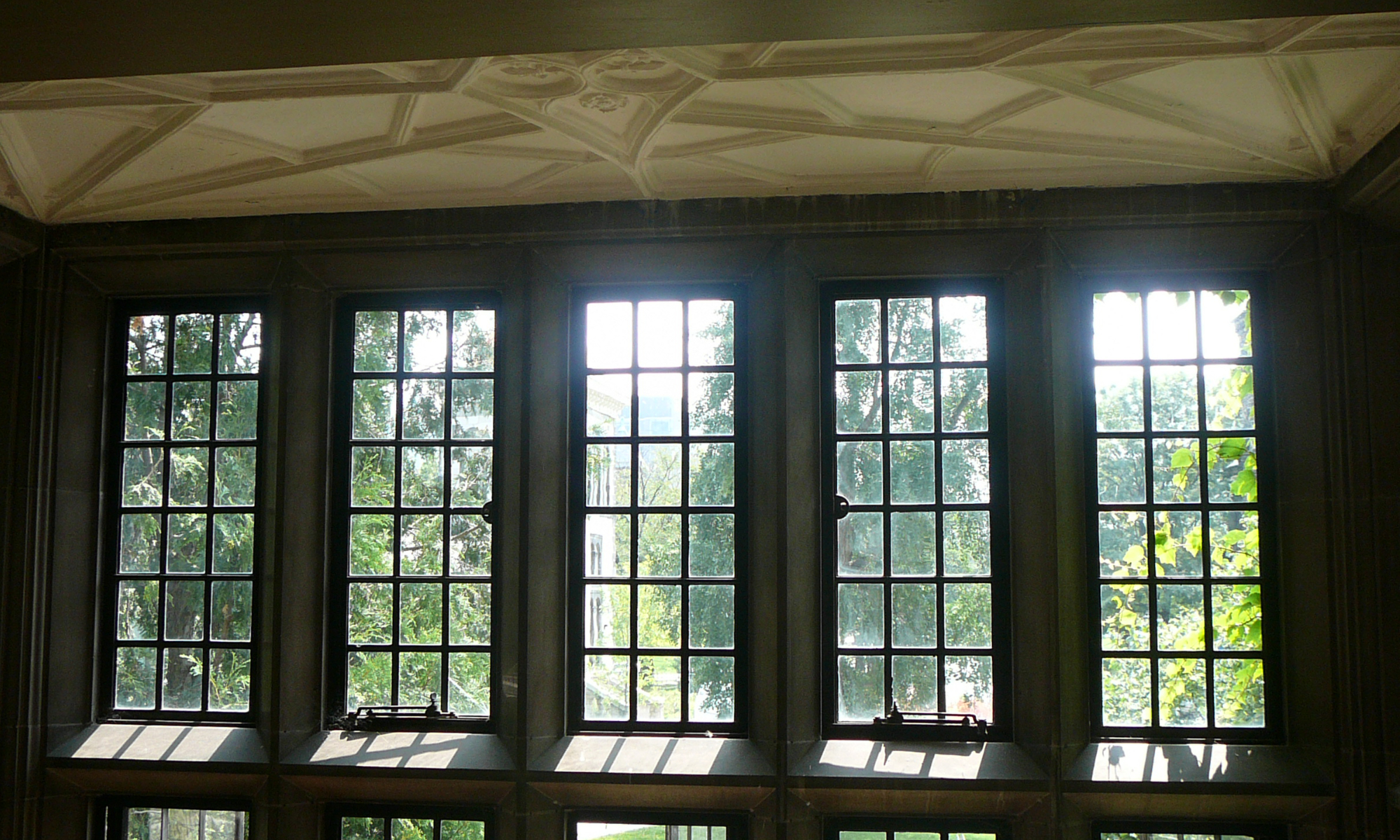
Example of historic windows at the University of Toronto. Source: TRACE
Project Close-out
Ensuring good document availability at the close of the rehabilitation project will go a long way in assisting owners and building managers keep up with these integrated and behaviour-based strategies. Accurate as-built drawings for all disciplines, information pertaining to building evolution, and summaries of building behaviour/intent statements (intended tenant and system behaviour) all need to be properly packaged and easily accessible in digital and binder (hard) copies. For heritage buildings, include information such as heritage evaluation and assessment reports and statements of significance into both hard and digital copies to assist management and users with understanding the interrelationships between their building’s environmental and built heritage conservation.