


Masonry
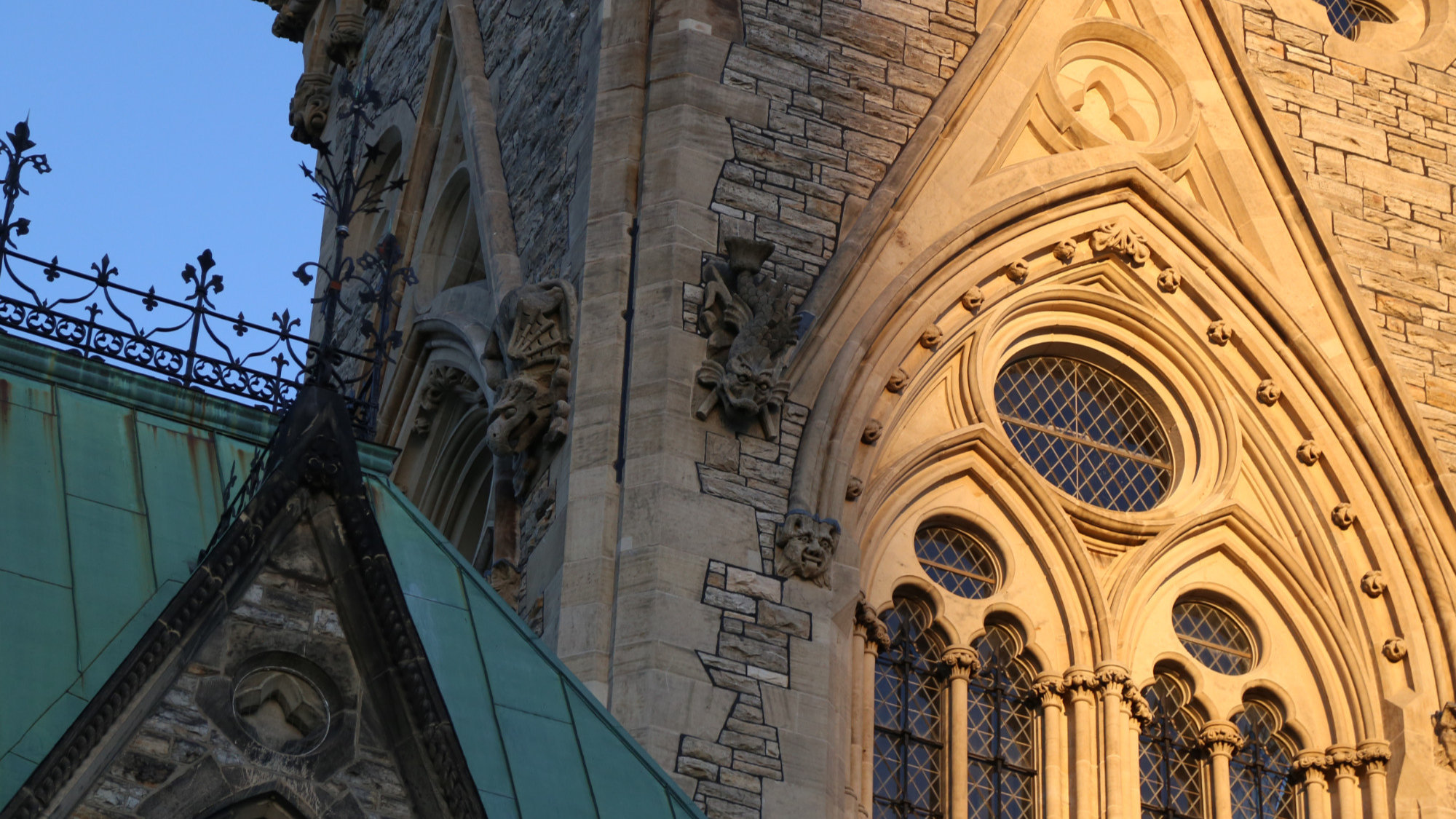
Rehabilitated masonry on the Southwest Tower of Parliament Hill's East Block. Ottawa, ON. Source: TRACE
Sustainable Conservation Project Guidelines for Masonry
| Recommended | |
|---|---|
| 1 | Using locally sourced masonry where appropriate to a building’s heritage character. |
| 2 | Retaining interior masonry partitions. |
| 3 | Integrating exterior masonry walls into interior spaces of an addition, limiting material loss and maintaining thermal mass. |
| 4 | Reinstating exterior masonry projecting elements that shield building envelope components. |
| 5 | Maintaining masonry permeability by carefully evaluating the impact of coating where necessary. |
| 6 | Maintaining masonry to mortar relationship and appropriate mortar mix. Mortar should act sacrificially to the masonry. |
| 7 | Balancing durability and locally sourced considerations when selecting new and/or replacement stone and masonry. |
Related Inherently Sustainable Elements
Sustainability Challenges
Sustainability challenges for masonry include:
- Limited adaptability in interior arrangements when used in interior partitions;
- Exhaustion of local clay and stone sources;
- Masonry, which relies on finite resources and extraction limits of quarries or manufacturing limits/impact of clay concrete products.
Standards and Guidelines for the Conservation of Historic Places in Canada Sustainability Considerations (Page 227)
| Recommended | |
|---|---|
| 21 | Selecting replacement materials from sustainable sources, where possible. For example, replacing deteriorated stone units using in-kind stone recovered from a building demolition. |